Overview
Curated abstract when available.
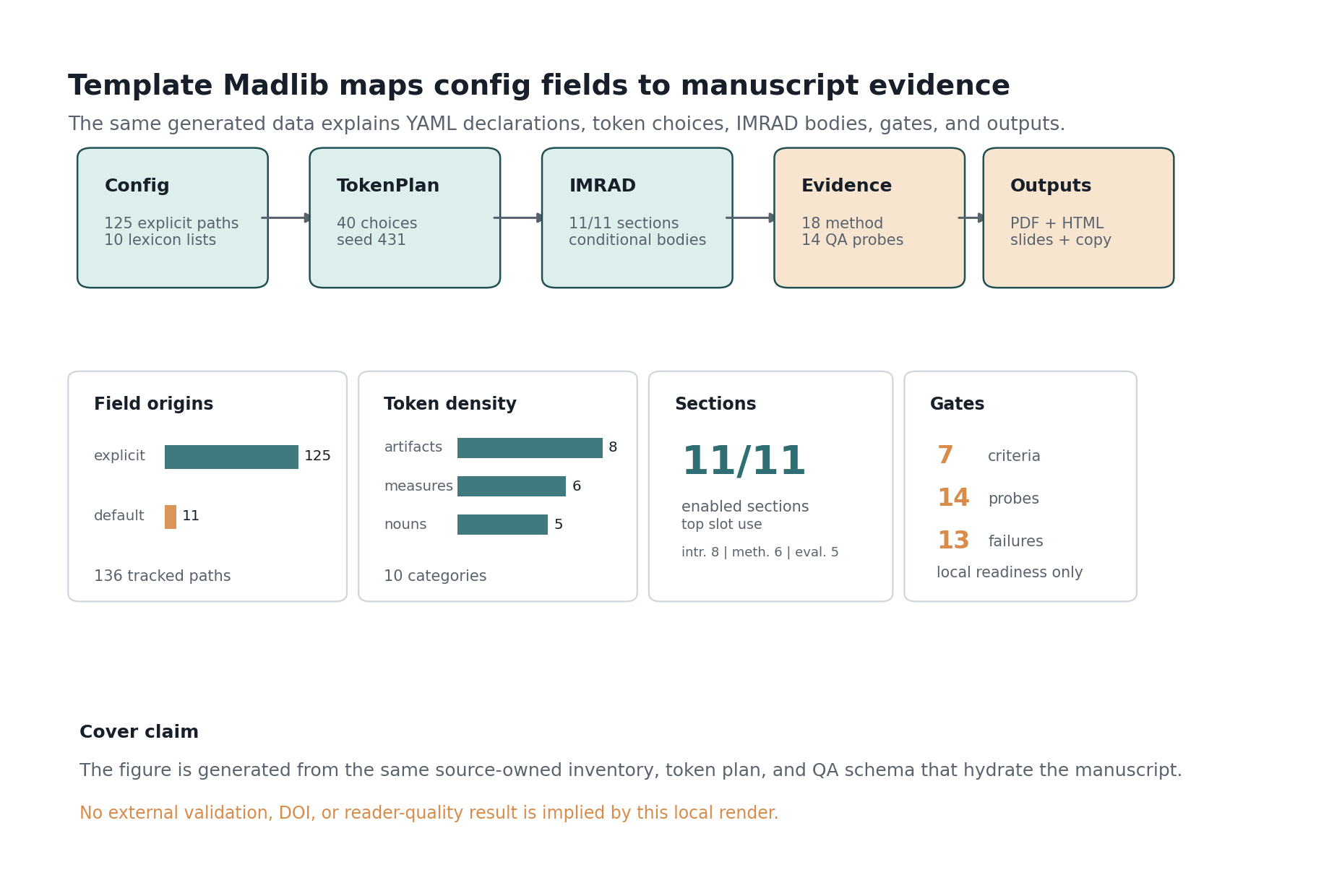
This exemplar asks whether a reviewable pipeline can hydrate a complete IMRAD manuscript from configuration-owned lexical data while preserving an audit trail that remains readable before and after rendering. The project deliberately keeps playful Mad Lib mechanics inside a serious reproducibility contract: the manuscript shell names large placeholders, the config declares allowable language, and the source code decides what text is emitted.
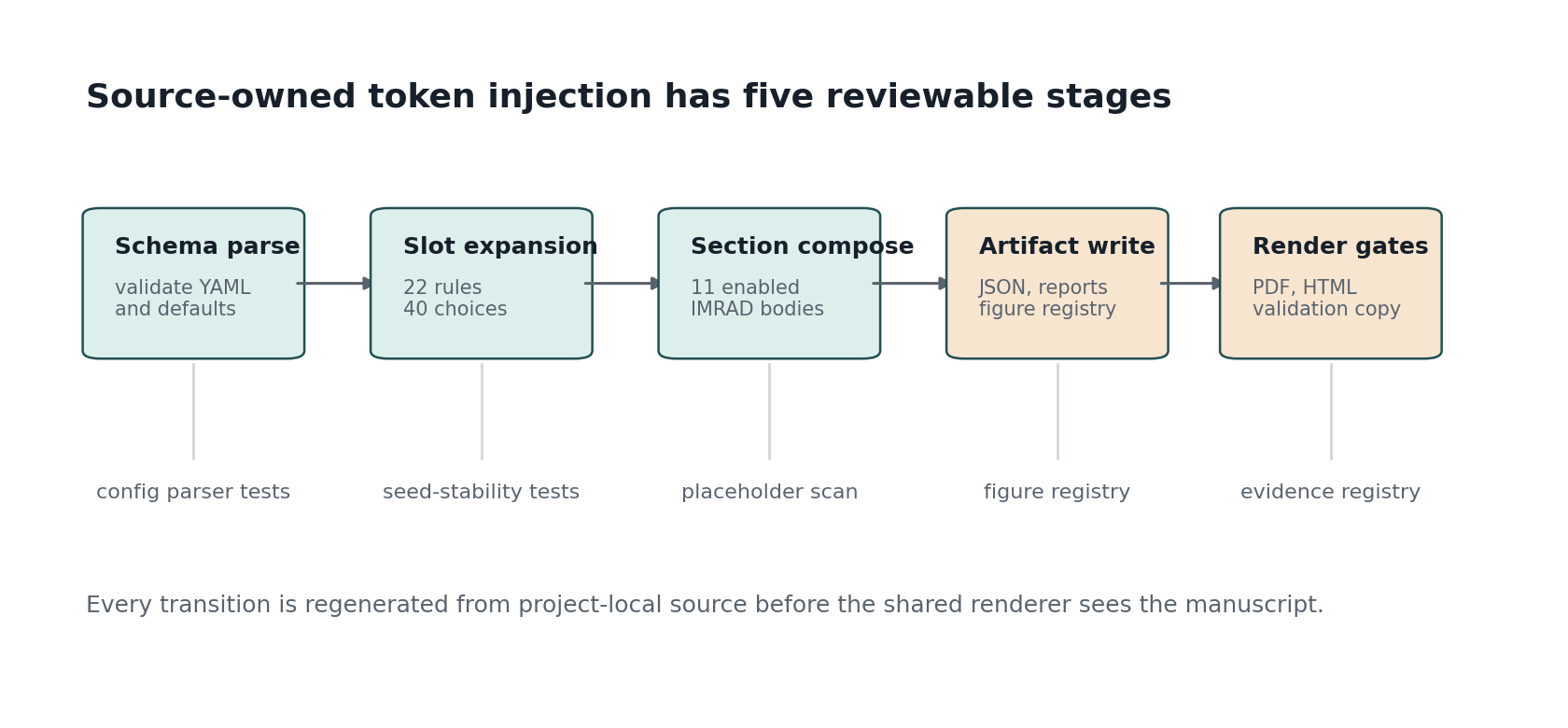
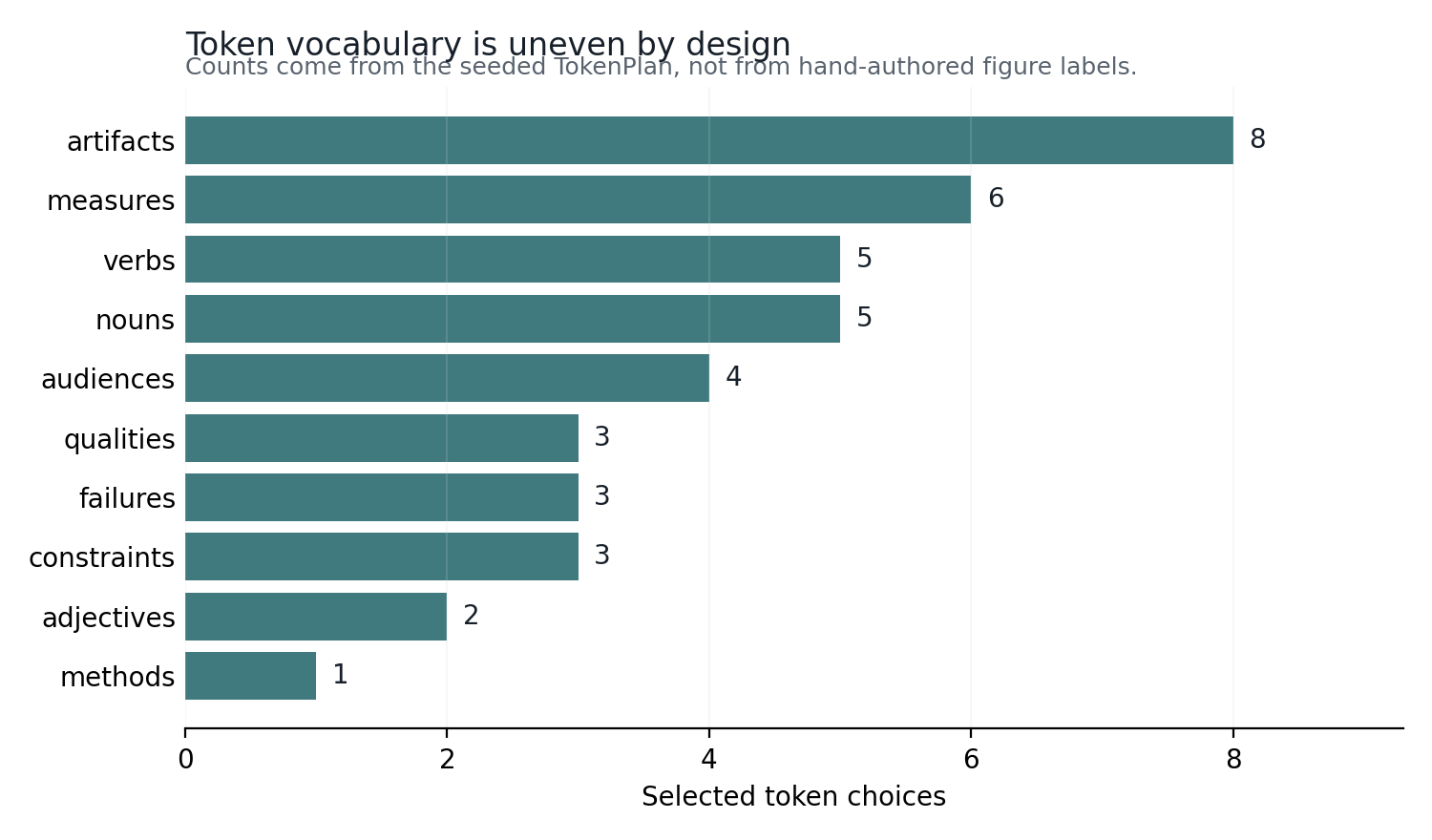
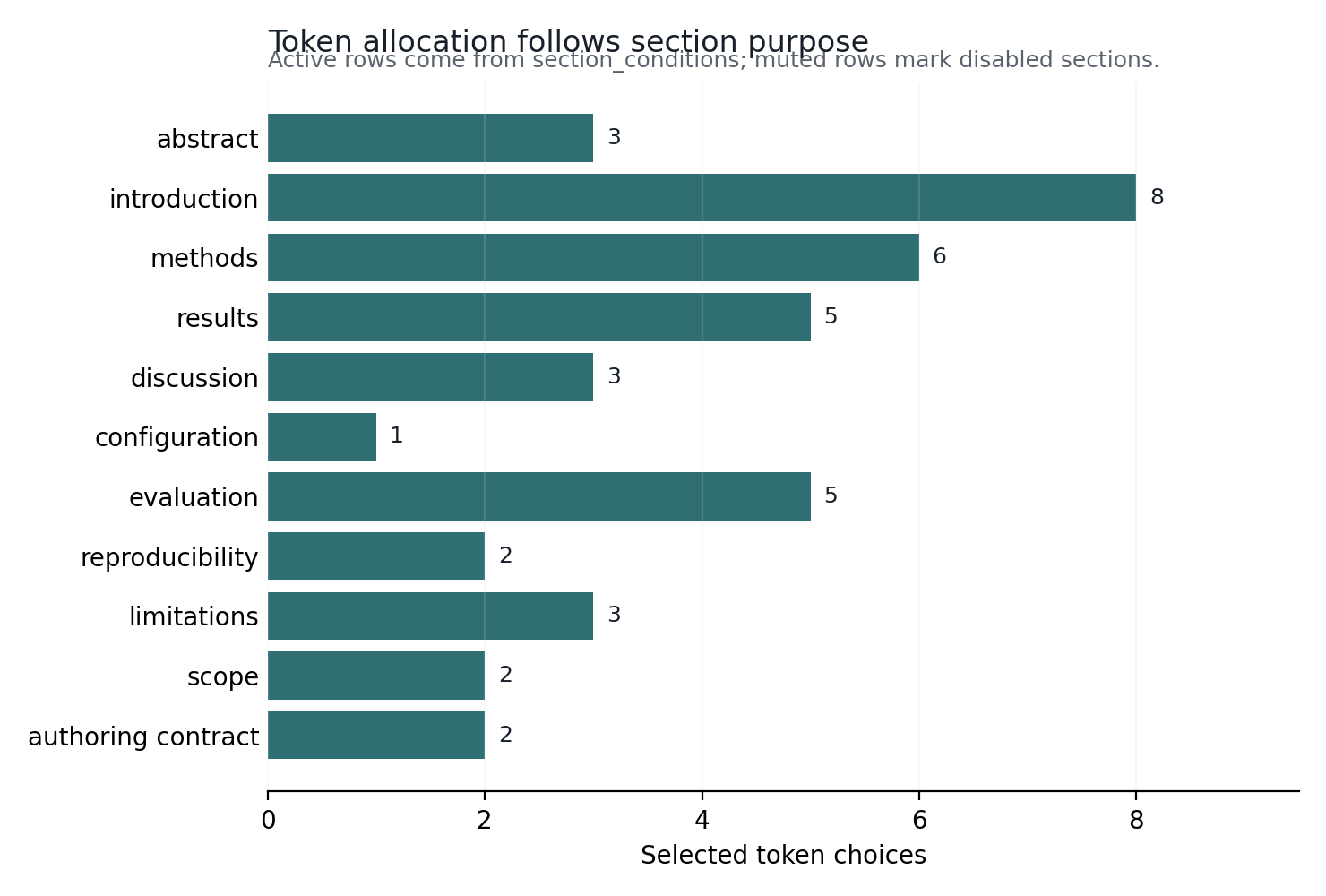
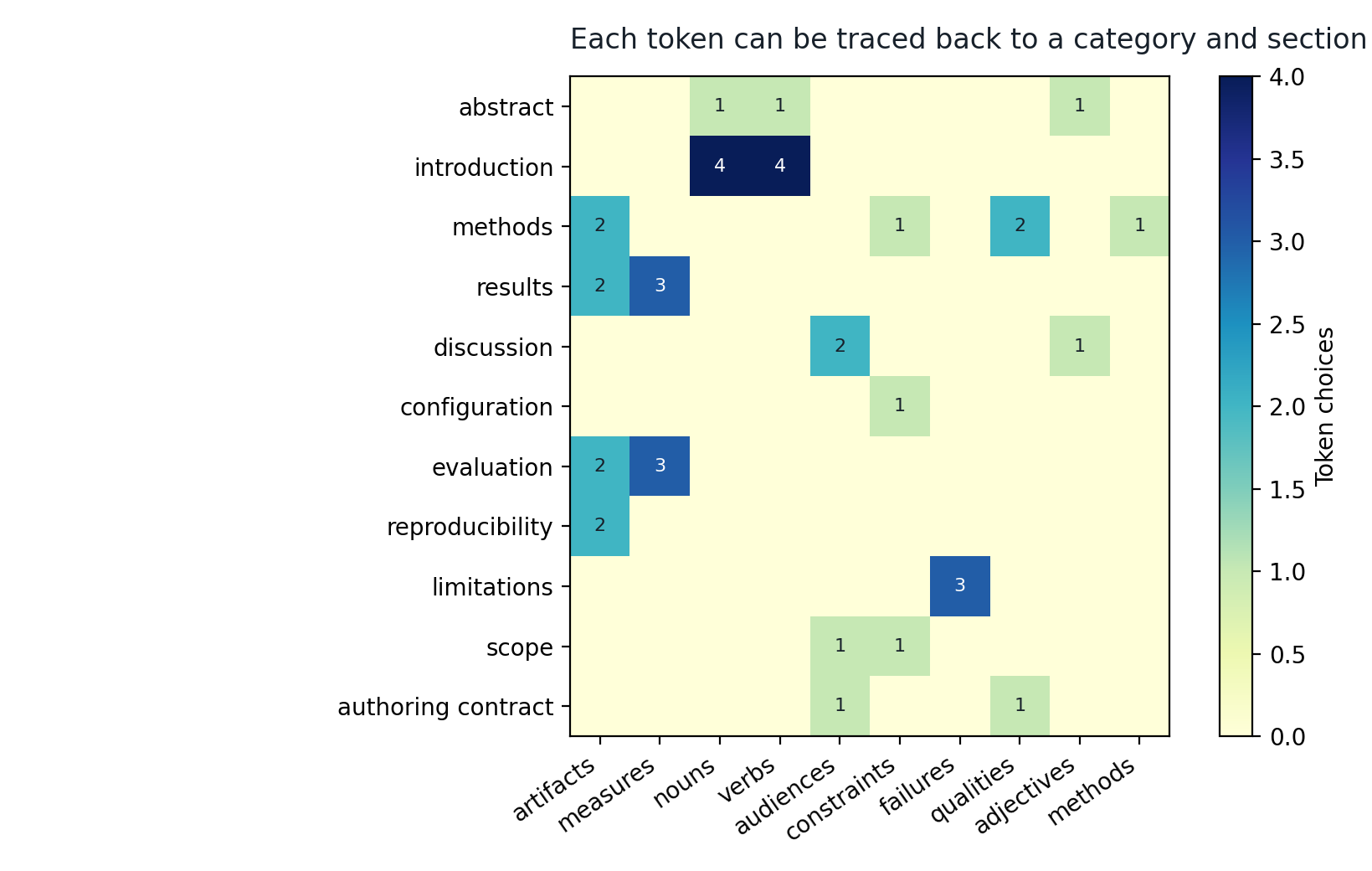
The committed seed is 431 and the current schema expands 22 slot rule(s) into 40 token choice(s) across 10 lexicon categories. The configured narrative moves are state the manuscript-generation problem, name the deterministic intervention, and summarize the audit surface. The central hypothesis is: Deterministic lexical injection can generate a complete conditional IMRAD manuscript while preserving token provenance, section intent, and audit-ready method evidence.
The result is not a claim that lexical substitution creates scholarship. It is a worked template for conditional manuscript assembly: section enablement, token provenance, figure registration, and unresolved-placeholder checks all become inspectable artifacts before the shared renderer produces PDF, HTML, and slides.
---
Associated artifacts
GitHub release: v0.1.1 (https://github.com/docxology/template_madlib/releases/tag/v0.1.1)
DOI: https://doi.org/10.5281/zenodo.20786638
Zenodo: https://zenodo.org/records/20786638
PDF SHA-256: d9248f4f372fc3baf21cbf5cc5cdb7daffe0e22e62ac6fa2e3a697a26f3308b6
Overview source: Curated paper metadata.
Artifacts
Tracked documentation and PDFs served directly from this folder.
README AGENTS SKILL Metadata Extracted text Citation metadata
- Friedman_2026_Template_a593c1fe.pdf 1,001,108 bytes
- Friedman_2026_Template_d9248f4f.pdf 1,001,791 bytes · extracted-text source
Extracted Images (9) — GitHub +3 more