Overview
Curated abstract when available.
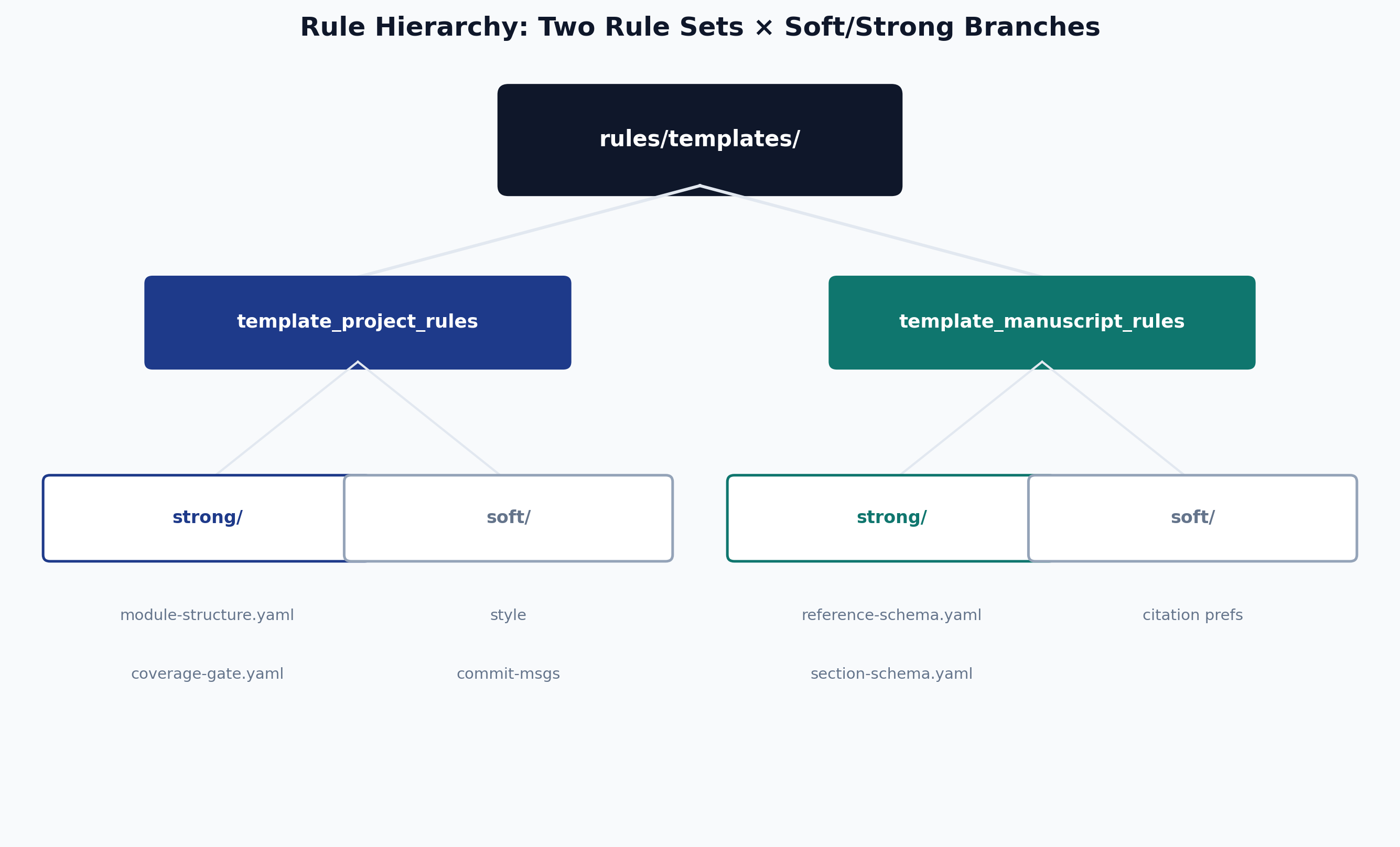
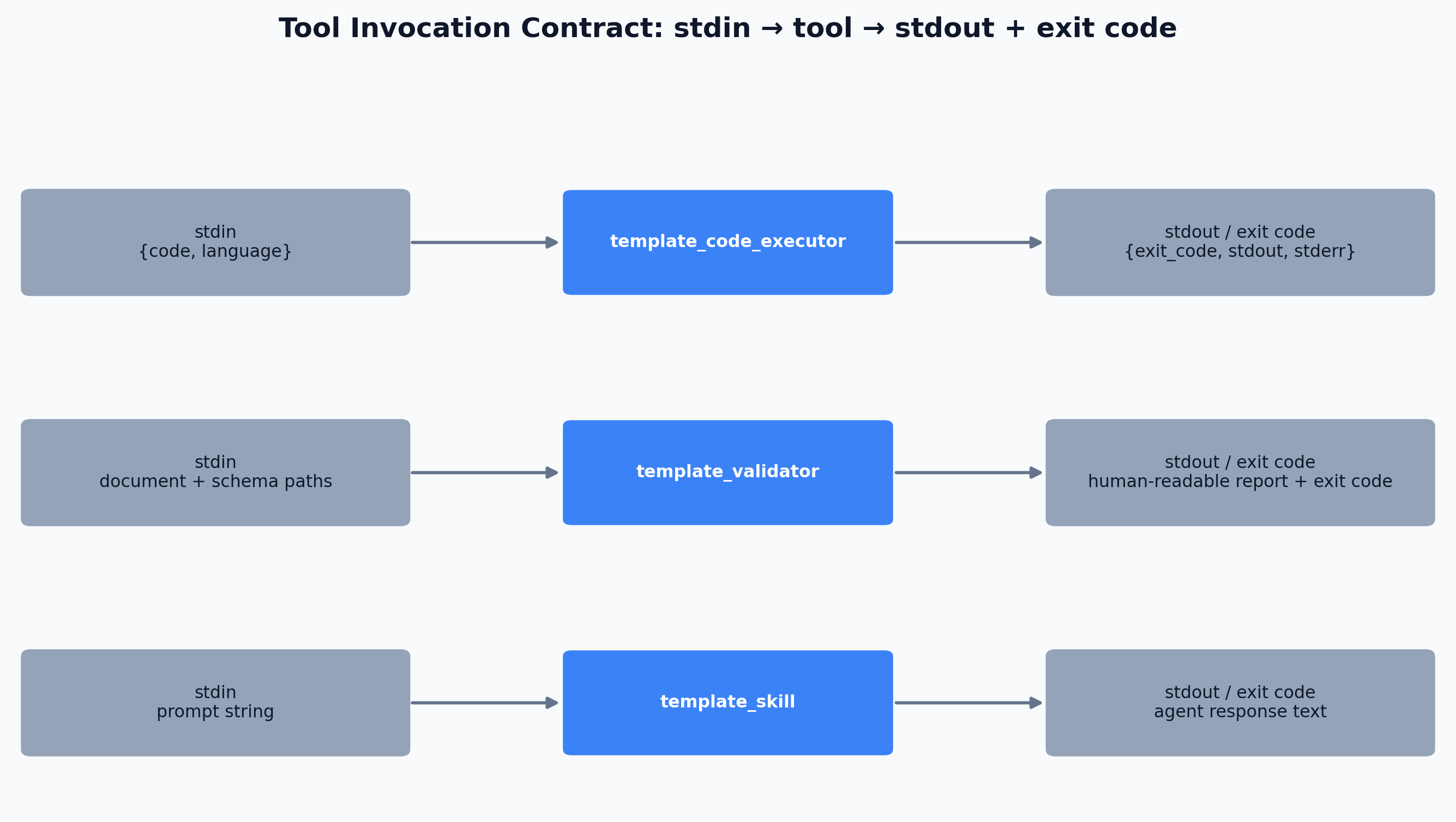
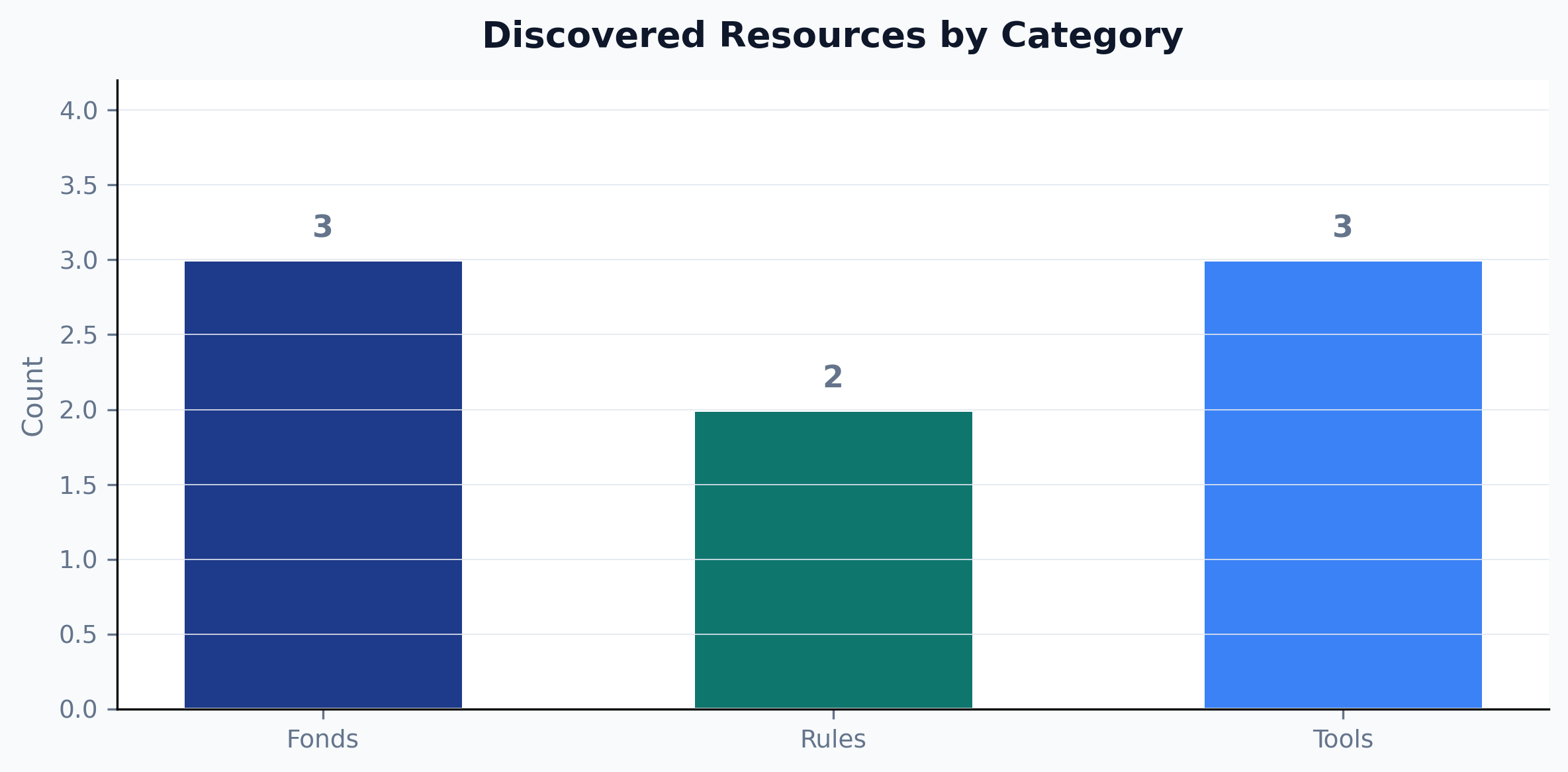
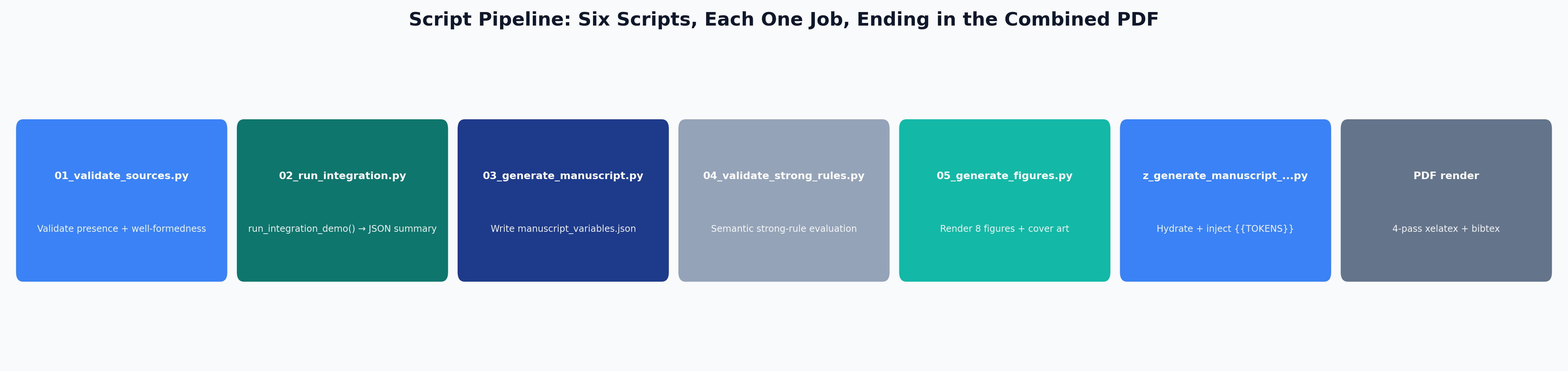
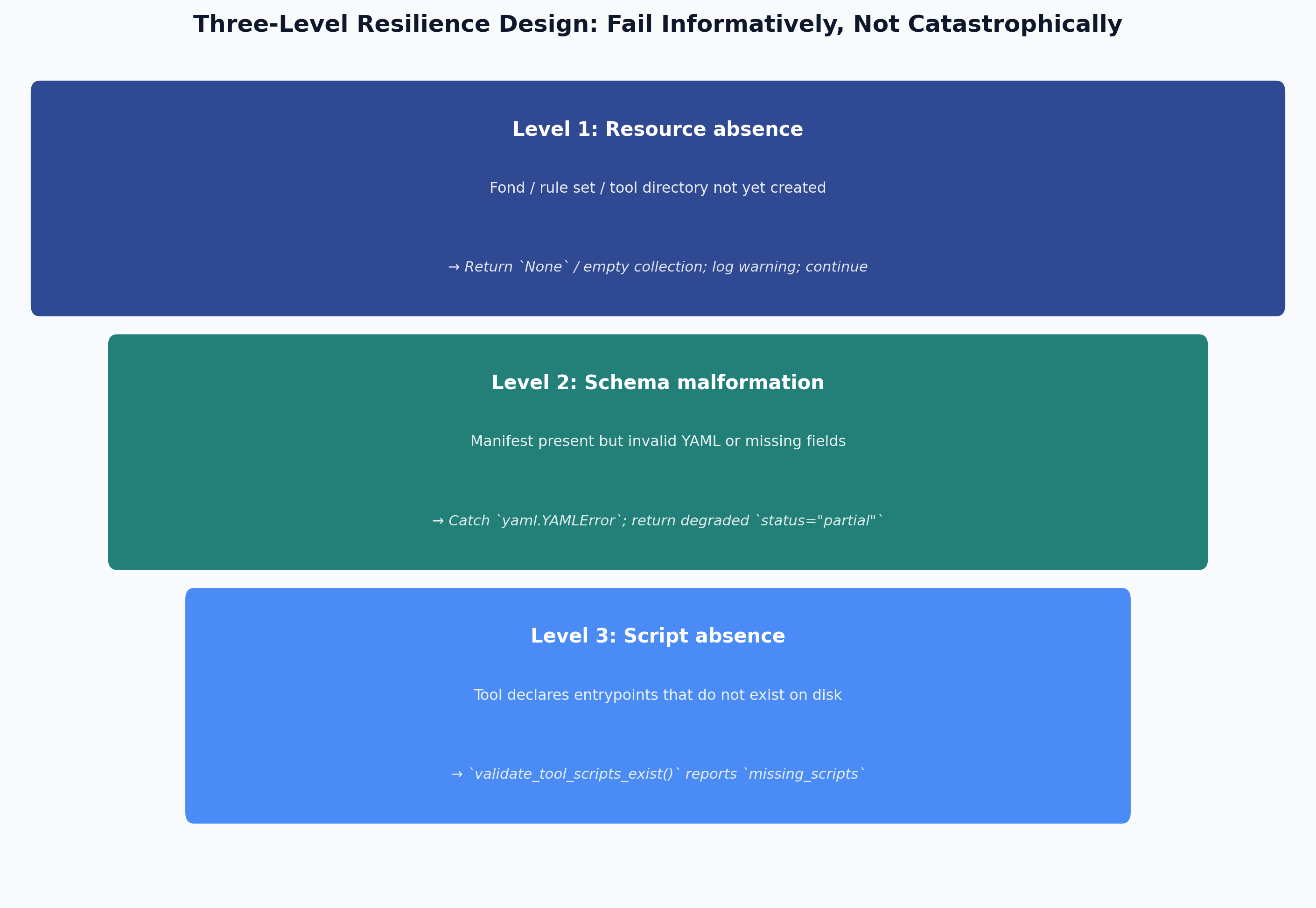
Research software repositories in monorepo configurations accumulate three categories of shared resources that individual projects must consume without re-implementing discovery logic: data pools (bibliographies, contacts, datasets), governance rules (style guides, coverage thresholds, citation schemas), and executable tools (code executors, validators, skill invocations). Without a canonical integration pattern, projects either duplicate discovery logic or silently ignore resources that fail to load — both outcomes degrade reproducibility and collaborative cohesion [Wilson et al., 2014, Taschuk and Wilson, 2017]. This paper presents template_pools_rules_tools, a meta-project exemplar that demonstrates how a single project can programmatically discover, validate, and exercise all three resource categories with zero tight coupling to any specific resource instance. The exemplar comprises eight Python modules — three resource readers (fonds_reader, rules_applier, tools_invoker), an orchestrator (integration), a semantic rule evaluator (strong_rule_evaluator), a figure generator (figures), a manuscript-token generator (manuscript_variables), and shared type definitions (type_defs) — plus six thin orchestration scripts and a fully token-injected manuscript pipeline. The architecture (fig. 1) separates resource ownership from resource consumption. Resources live in top-level fonds/, rules/, and tools/ directories and are never modified by consumers. Each resource exposes a typed manifest (fonds.yaml, rules.yaml, tools.yaml) that the corresponding reader module uses for discovery and validation. All readers implement graceful fallbacks: they return None or empty collections when a resource is absent, log a warning via the standard library logging module, and allow the integration pipeline to continue. This revision extends the original three-figure presentation to eight content figures plus a cover illustration — a fond taxonomy (fig. 2), a rule hierarchy (fig. 3), a tool invocation contract (fig. 4), a three-level resilience diagram (fig. 8), and a script pipeline flow (fig. 6) — so that every structural claim in the prose has a corresponding visual. In a representative pipeline run, the integration demo loaded 3 fonds, validated 2 rule sets, discovered 3 tools, and processed 8 bibliography entries — all reported as structured JSON that populates manuscript variable tokens at render time. Tests covering the eight src/ modules (across nine test files) achieve well above the required >=90% combined line coverage and use real file paths rather than mocks, ensuring that reported counts are genuine — run uv run pytest … --cov-report=term for the current test count and coverage percentage rather than trusting a number printed here. The template_pools_rules_tools exemplar provides a reference implementation that any project in the template repository can consult when designing its own resource-consumption layer.
Overview source: Curated paper metadata.
Artifacts
Tracked documentation and PDFs served directly from this folder.
README AGENTS SKILL Metadata Extracted text Citation metadata
- Friedman_2026_Pools_6908c1a0.pdf 1,269,068 bytes · extracted-text source
Extracted Images (9) — GitHub +3 more