Overview
Curated abstract when available.
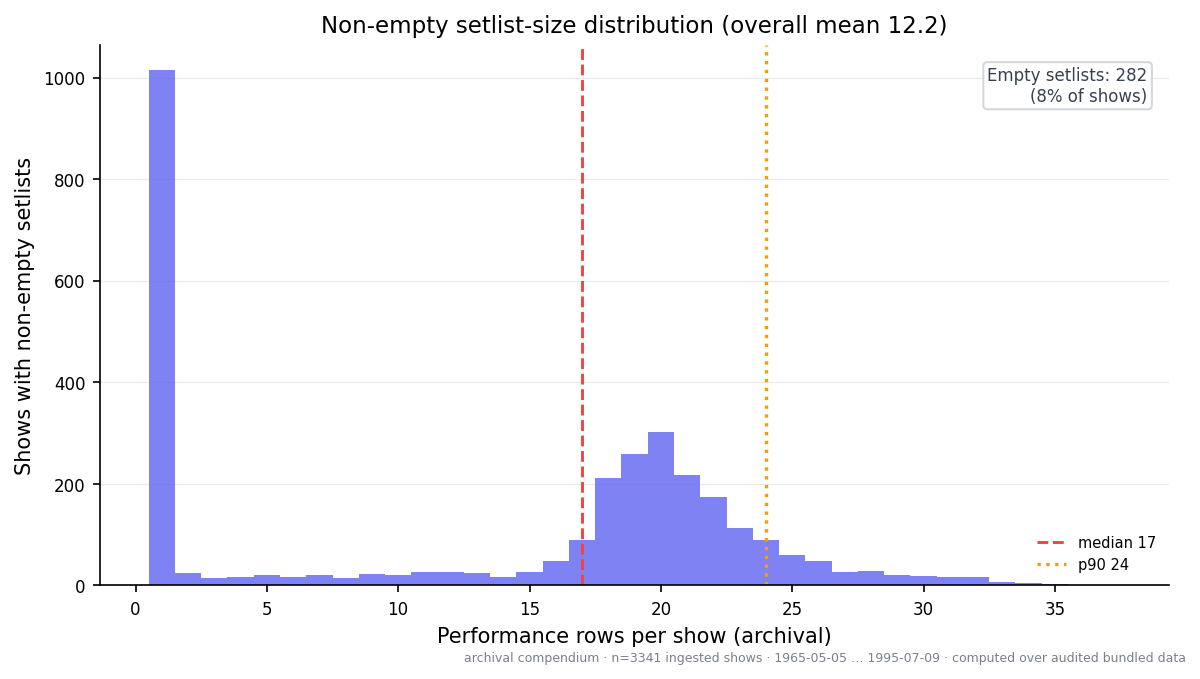
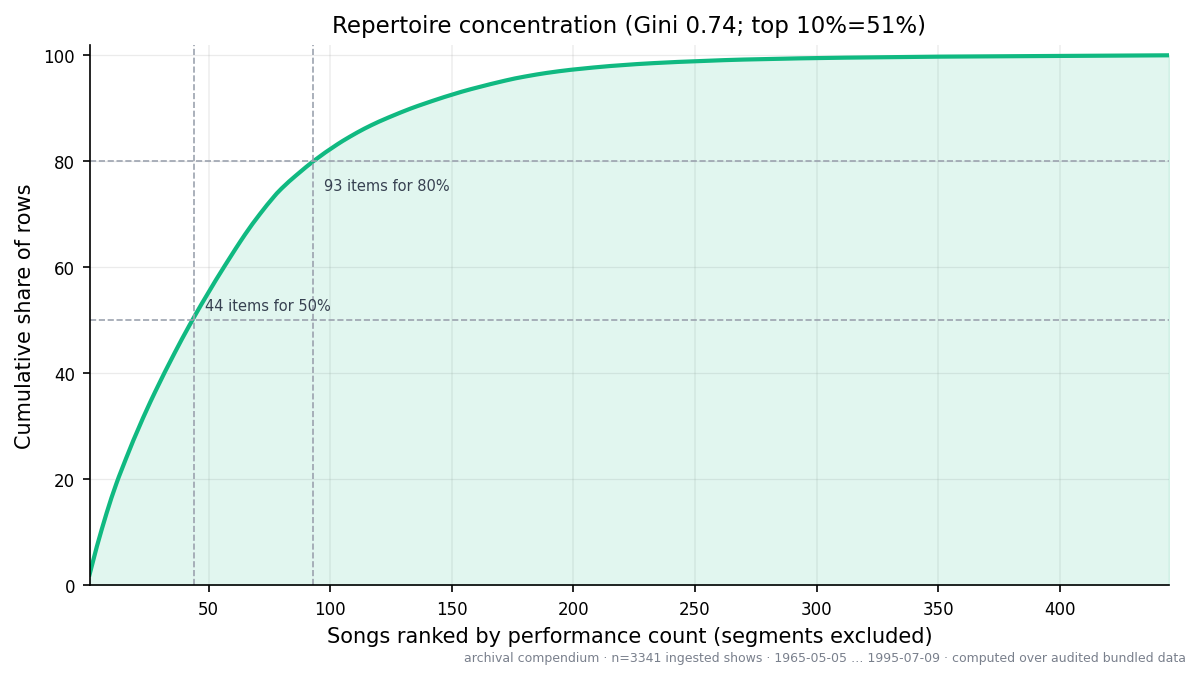
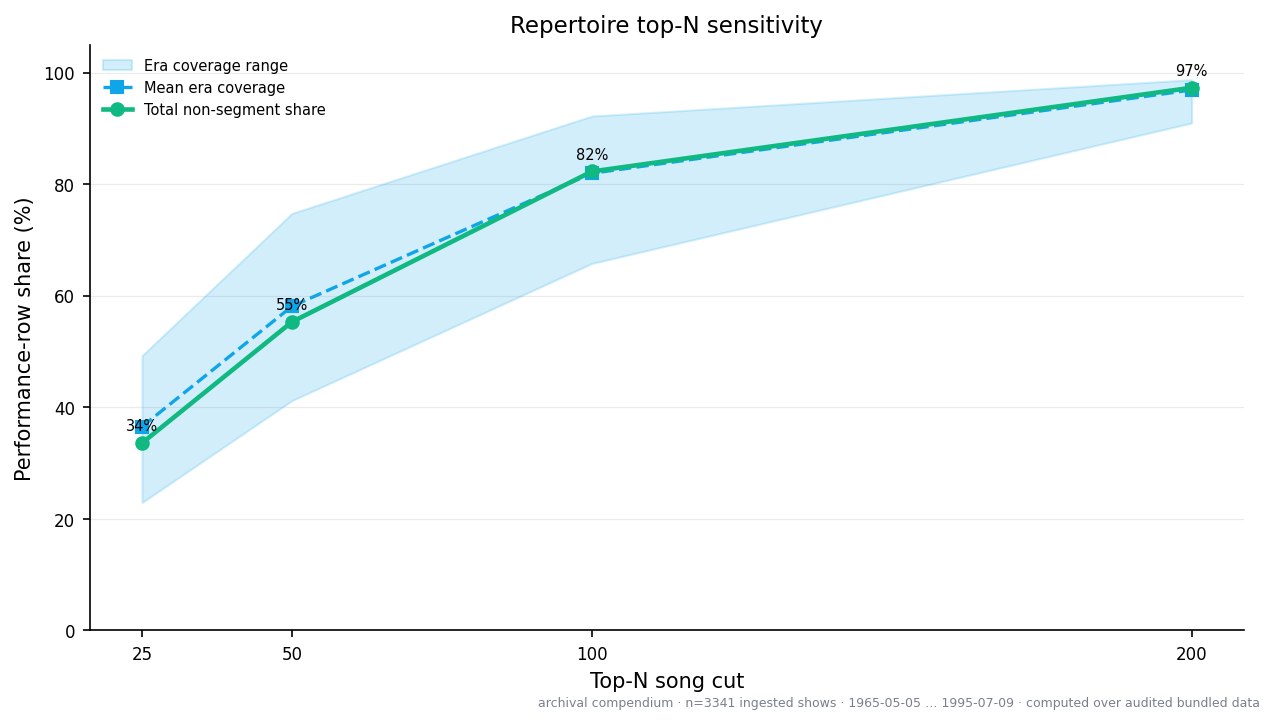
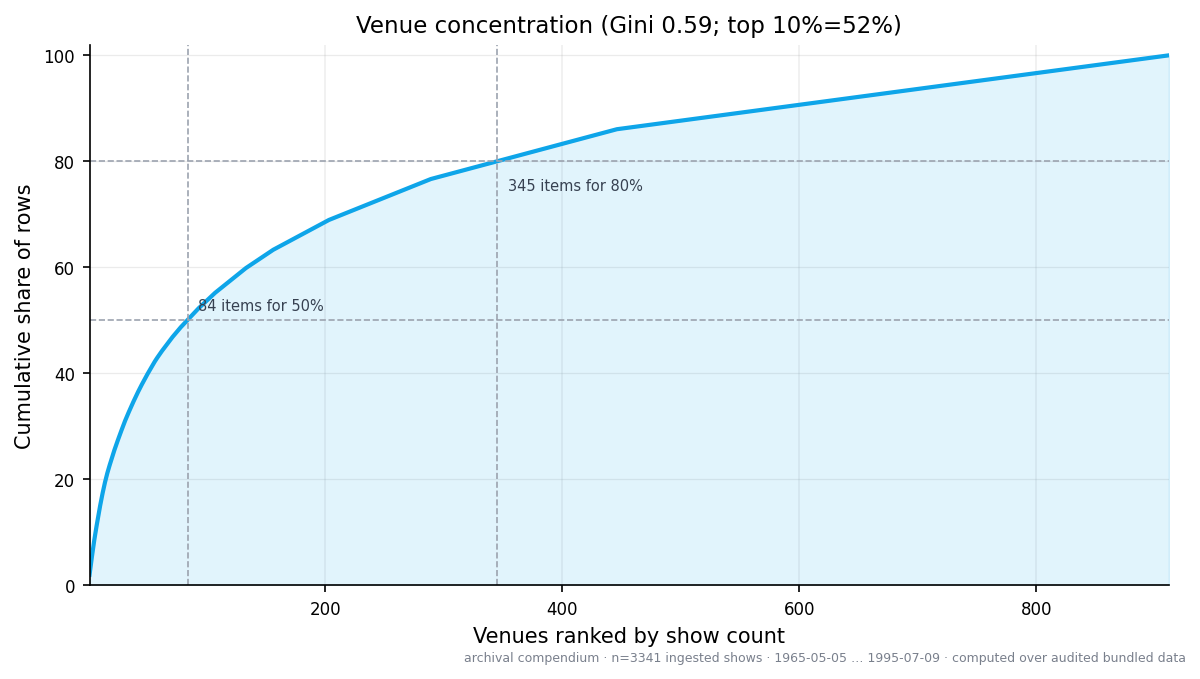
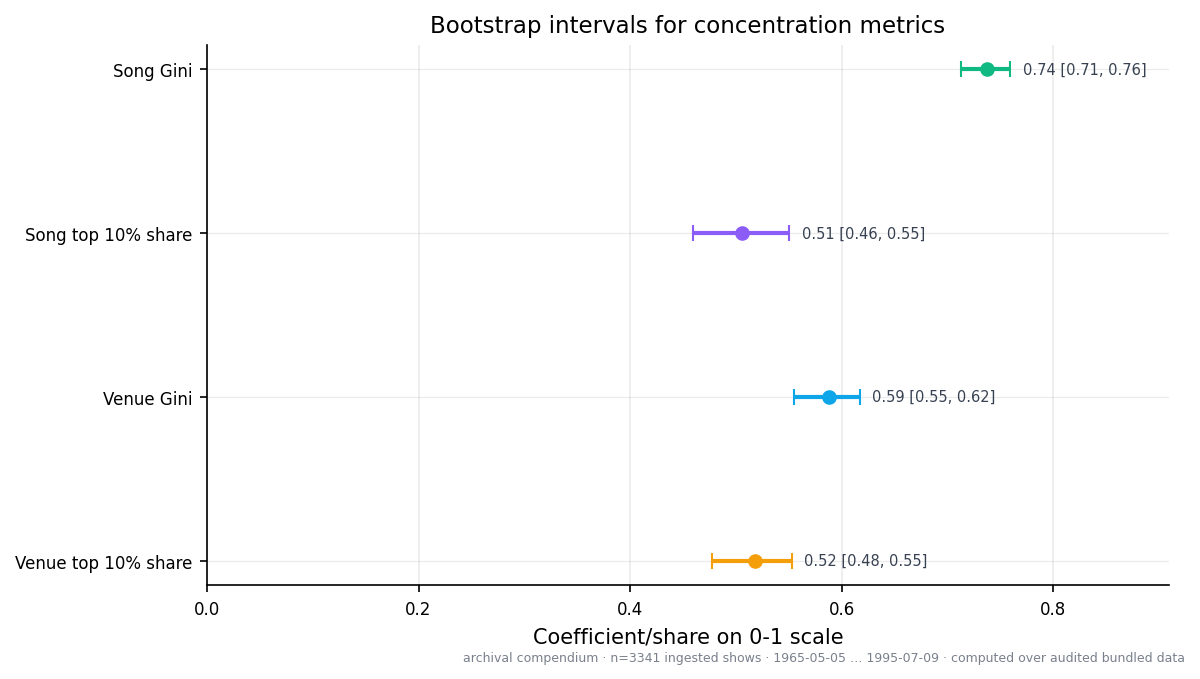
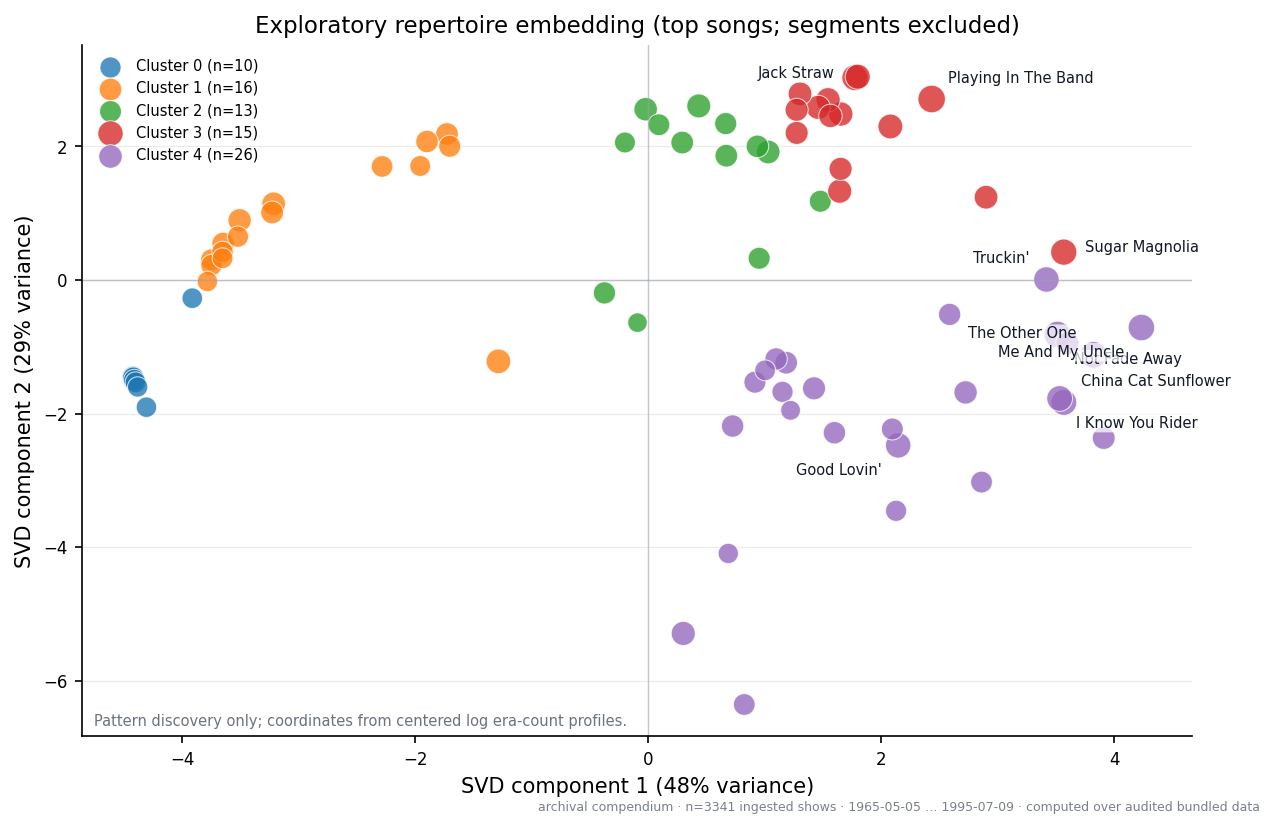
We present a modular, citation-bound data compendium for the Grateful Dead universe — shows, songs, performances, personnel timelines, venues, recordings, and reception — and a category-theoretic interpretation of the performance graph. The work is grounded in the archival reality that Grateful Dead history is both institutional and participatory: UCSC's Grateful Dead Archive and the Internet Archive collection preserve formal and community records , while taping and trading scholarship shows why setlists and recording metadata are cultural evidence, not merely fan trivia . The surrounding source dossier also binds the non-quantitative historical frame -- formation and Acid Test context, Wall of Sound engineering, live recording/liveness scholarship, Deadhead sociology, studio-era reception, and public recognition -- to checked sources rather than to folklore alone . The compendium integrates nine primary sources (Setlist.fm , The SetList Program , the Mark Leone CMU setlist archive , GDsets , gdshowsdb , the Internet Archive Live Music Archive , the Alex Allan / whitegum lyric finder , the official band site , and Wikipedia ) with four reference sources (Britannica , the lineup-changes guide , Dodd and Trist's The Complete Annotated Grateful Dead Lyrics , and the Grateful Stats front-end ) and secondary corpora and community discussions . Each source is parsed by an independently testable reference module written against the documented record shape; the committed compendium under `data/archival/` is the dataset reported here (3341 ingested shows (gdshowsdb + truckin gap-fill; community literature estimates ~2318 canonical concerts), 645 songs, 912 venues, 40757 performance rows). A runtime completeness audit and figure-validation gate certify referential integrity and non-degenerate outputs on every pipeline run. Integration is a deterministic, sort-keyed merge over canonical slugs; registered figures also emit CSV/JSON data tables, and a first-principles claim ledger classifies each major result by irreducible input, hard constraint, assumption, validation artifact, and interpretation limit. Exploratory repertoire/uncertainty panels are labelled as pattern-discovery rather than causal inference. We then exhibit four small but real categorical constructions, situated against transformational and categorical music-theory precedents : a poset category of dates, a discrete category of shows, a monotone cumulative setlist functor and lineup functor from dates into sets, and a span representation that takes each performance to be the apex of a span between its show and its song. Wide pullbacks over a fixed show recover the show's setlist; wide pullbacks over a fixed song recover the song's performance history. The active-band roster, by contrast, is a non-monotone presheaf on the date poset — a categorical formalization of the familiar fact that members come and go. The artefacts in this paper come from the committed archival snapshot; all source-ingestion modules are written against the real source shape so that `scripts/00_fetch_sources.py --online --write-archival` refreshes the full snapshot. --- Associated artifacts GitHub release: The Music Never Stopped: A Grateful Data Compendium (v1.0.0) (https://github.com/docxology/grateful_data/releases/tag/v1.0.0) PDF SHA-256: 2d42bfd04e0b32e4871d5bcbe2c65bcce58cca336da240af7c6fd03a6563a709
Overview source: Curated paper metadata.
Artifacts
Tracked documentation and PDFs served directly from this folder.
README AGENTS SKILL Metadata Extracted text Citation metadata
- Friedman_2026_Music_2d42bfd0.pdf 4,142,162 bytes · extracted-text source
Extracted Images (36) — GitHub +30 more