Overview
Curated abstract when available.
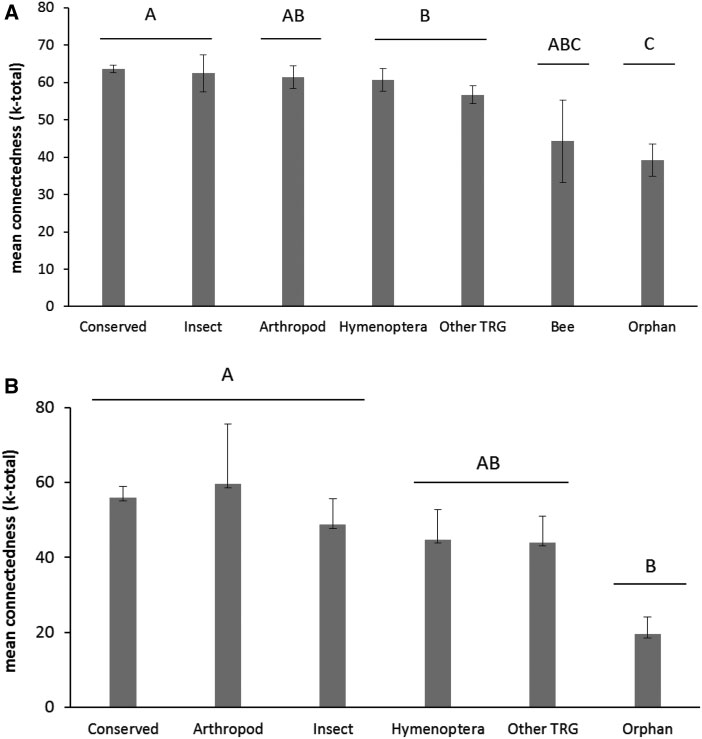
Whether coding or regulatory sequence change is more important to the evolution of phenotypic novelty is one of biology’s major unresolved questions. The field of evo–devo has shown that in early development changes to regulatory regions are the dominant mode of genetic change, but whether this extends to the evolution of novel phenotypes in the adult organism is unclear. Here, we conduct ten RNA-Seq experiments across both novel and conserved tissues in the honey bee to determine to what extent postdevelopmental novelty is based on changes to the coding regions of genes. We make several discoveries. First, we show that with respect to novel physiological functions in the adult animal, positively selected tissue-specific genes of high expression underlie novelty by conferring specialized cellular functions. Such genes are often, but not always taxonomically restricted genes (TRGs). We further show that positively selected genes, whether TRGs or conserved genes, are the least connected genes within gene expression networks. Overall, this work suggests that the evo–devo paradigm is limited, and that the evolution of novelty, postdevelopment, follows additional rules. Specifically, evo–devo stresses that high network connectedness (repeated use of the same gene in many contexts) constrains coding sequence change as it would lead to negative pleiotropic effects. Here, we show that in the adult animal, the converse is true: Genes with low network connectedness (TRGs and tissue-specific conserved genes) underlie novel phenotypes by rapidly changing coding sequence to perform new-specialized functions.
Overview source: Curated paper metadata.
Artifacts
Tracked documentation and PDFs served directly from this folder.
README AGENTS SKILL Metadata Extracted text Citation metadata
- 2015_HoneyBeeEvolution.pdf 537,373 bytes · extracted-text source